The story behind the Nevermind album cover
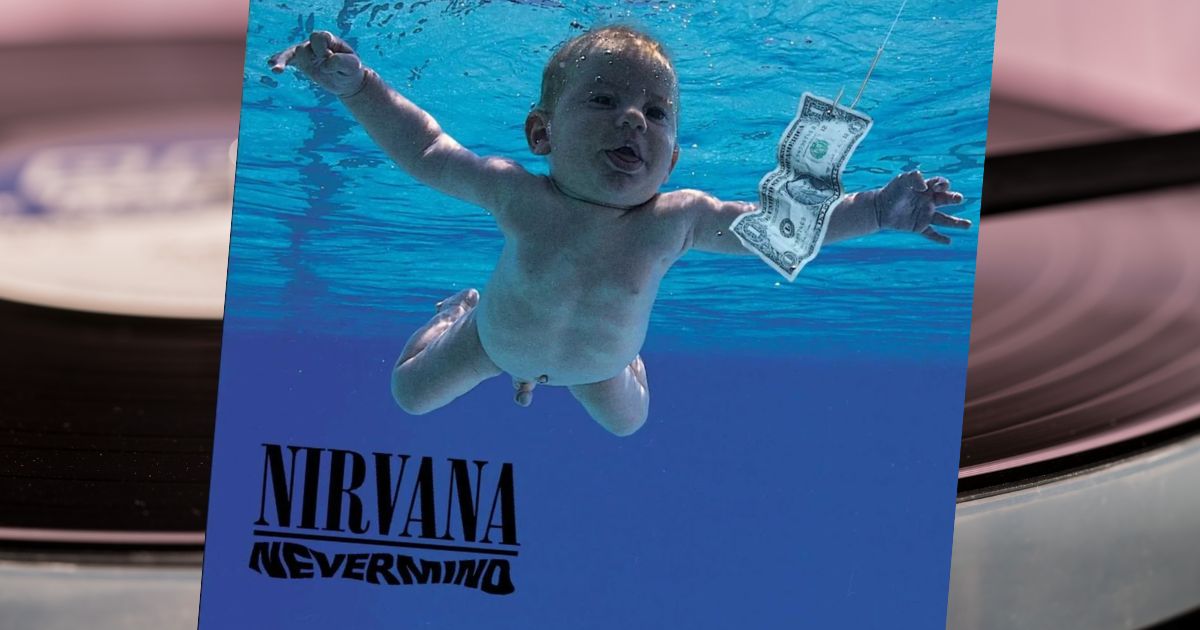
Short version: the cover of Nirvana's Nevermind is a photograph of a four-month-old baby swimming underwater, taken at a Pasadena pool in 1991. The dollar bill on a fish hook was added afterwards, at the band's request.
 NevermindNirvana · 1991
How it came about
The idea started with Kurt Cobain watching a documentary about water births. The band wanted an underwater baby; the label wanted something less complicated.
Rather than stage an elaborate shoot, photographer Kirk Weddle — who specialised in underwater work — photographed several babies at a public pool, with parents present, in sessions lasting seconds at a time. The image chosen was of Spencer Elden, then a few months old, whose parents were friends of the photographer.
Elden has spoken publicly about the cover many times over the years, and recreated the photograph as an adult on several anniversaries. He has also been involved in litigation with the band's estate about the image, which is ongoing enough that it isn't worth summarising here.
The detail that makes it
The dollar bill on the fish hook was not in the original photograph. It was composited in afterwards, because the band wanted the image to say something rather than simply be striking.
That single addition is what turns the sleeve from a pleasant underwater photograph into an argument about the music industry — a baby swimming towards money on a hook, on a record about to sell tens of millions of copies for a major label.
Cover the hook and it is a stock image. Include it and it is Nevermind.
Why it works as a piece of design
Three things, and they are the same three that show up on almost every cover that survives being cropped to a fragment.
A single, unmistakable colour. That specific pool-water turquoise fills most of the frame. Almost no other record uses it, which means even a blank corner of the sleeve identifies it.
One subject on a plain field. No band, no environment, no competing detail — just water and one figure.
A detail that rewards a second look. The hook is small. You notice it after the baby, and it changes the meaning of everything you have already seen.
The sleeve's afterlife
It has been parodied constantly, which is the clearest measure of a cover's success — you can only parody an image everyone already holds in their head.
It is also a rare case of a cover being as famous as the record. Ask most people to describe In Utero and they will struggle. Ask them to describe Nevermind and they will get the water, the baby and usually the dollar.
If you want to find out how little of it you actually need to see, that is the entire premise of VinylPeek — a cover hidden behind 64 tiles, scored on how few you peel. Nevermind tends to go early. You can also read about other covers with details hiding in plain sight, or browse the 1990s archive.